Are Your Supplements Replacing Your Social Life? The Lonely Truth Behind America's Wellness Obsession
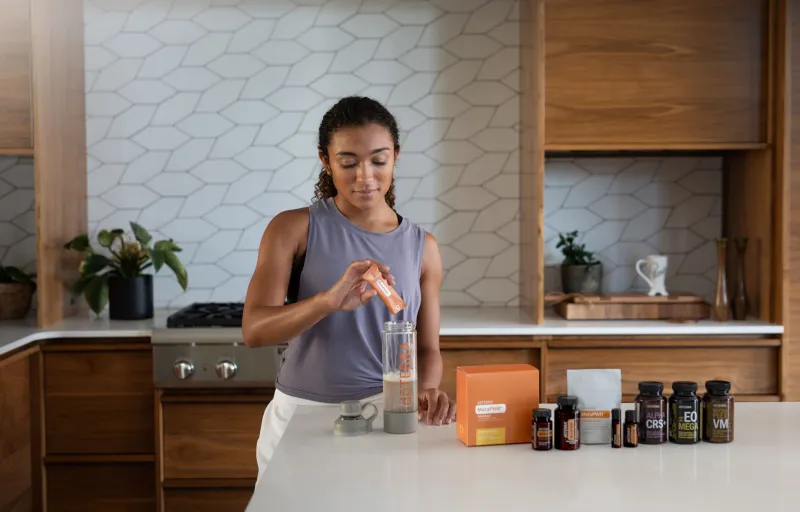
Let's do a quick audit. Open your medicine cabinet — or your nightstand drawer, or that overstuffed corner of the kitchen counter. How many bottles are in there? Magnesium glycinate for sleep. Ashwagandha for stress. Vitamin D because your doctor mentioned it once. A probiotic you read about on Instagram. Lion's mane because a podcast convinced you your brain needed it.
Now here's the harder question: When did you last have a long, unguarded conversation with someone who genuinely knows you?
That gap — between a cabinet full of solutions and a life that still feels a little hollow — is worth sitting with.
The Supplement Boom Is Real, and So Is the Loneliness Crisis
The US supplement industry crossed the $50 billion mark and hasn't looked back. At the same time, the surgeon general has officially declared loneliness a public health epidemic, with nearly half of American adults reporting measurable feelings of isolation. These two trends aren't just happening at the same time. There's a real argument to be made that they're feeding each other.
When life feels disconnected, we tend to reach for things we can control. And a supplement routine is extraordinarily controllable. You research it, you order it, you take it on a schedule. It feels like self-mastery. It feels like doing something. The problem is that many of the things we're trying to fix with pills — low mood, chronic fatigue, brain fog, anxiety, disrupted sleep — have deep roots in social and relational health that no capsule can reach.
What Your Body Is Actually Asking For
Here's some biology worth knowing: human beings are wired for connection at a physiological level. Not metaphorically — literally. Oxytocin, sometimes called the "bonding hormone," regulates stress responses, lowers cortisol, and supports immune function. It's released through physical touch, eye contact, laughter, and genuine emotional intimacy. You cannot buy it in a dropper bottle.
Chronic loneliness, meanwhile, triggers the same inflammatory pathways as physical injury. It raises cortisol levels, disrupts sleep architecture, and suppresses immune response. Sound familiar? Those are the exact symptoms driving most people toward their supplement stacks in the first place.
So we take ashwagandha to lower cortisol that's elevated because we're isolated. We take melatonin to fix sleep that's disrupted because we're stressed. We take immune boosters to compensate for inflammation driven by disconnection. It's a loop — and the supplements are treating the downstream effects of a problem they were never designed to solve.
The Psychology of the Solo Wellness Journey
There's nothing wrong with wanting to take care of your health. But American wellness culture has increasingly framed self-care as a deeply individual project — something you optimize alone, track alone, and perfect alone. The market reflects this. Most supplement marketing speaks directly to you and your body, your unique biology, your personalized stack.
What gets lost in that framing is the enormous body of research showing that community is a health intervention. The Harvard Study of Adult Development — one of the longest-running studies on human happiness — found that the quality of people's relationships was the single strongest predictor of health and longevity. Not diet. Not exercise habits. Relationships.
Loneliness researcher Julianne Holt-Lunstad has found that social isolation carries health risks comparable to smoking 15 cigarettes a day. And yet, the wellness industry's response to a nation of exhausted, inflamed, sleep-deprived people has largely been to sell them more products to take alone in the morning.
This Isn't About Shaming Your Supplement Shelf
To be clear: some supplements genuinely help, and we're not here to throw yours in the trash. Vitamin D deficiency is real and widespread, especially in northern states with limited winter sunlight. Magnesium depletion is common. If you're working with a healthcare provider and addressing a documented need, that's just good self-care.
But there's a difference between supplementing an otherwise nourished life and using a wellness routine as a stand-in for the messier, more vulnerable work of building actual human connection. One supports your health. The other delays a reckoning.
Ask yourself honestly: Is your morning supplement ritual a form of genuine care — or is it also a way to feel productive and purposeful without having to reach out to anyone? Is the optimization mindset helping you thrive, or is it giving you something to focus on so you don't have to notice how quiet your life has gotten?
What Community-Based Wellness Actually Looks Like
Cultures with the longest-lived, healthiest populations — the so-called Blue Zones in places like Sardinia, Okinawa, and Loma Linda, California — don't have elaborate supplement protocols. What they have are dense social networks, shared meals, intergenerational relationships, and a sense of belonging to something larger than themselves.
That's not a coincidence. And it's not something you can replicate with a wellness stack, no matter how thoughtfully curated.
The good news is that building more relational health into your life doesn't require a dramatic overhaul. It can start small:
- Replace one solo wellness activity with a shared one. Take your walk with a friend instead of alone with a podcast. Join a yoga class instead of streaming one at home. The physical benefits are the same; the social benefits are additive.
- Eat with other people when you can. Shared meals are one of the most consistent predictors of wellbeing across cultures. The act of sitting down together — without screens — does something a probiotic simply cannot.
- Invest in the relationships that already exist. Text someone you've been meaning to reconnect with. Show up for a neighbor. Say yes to the thing you'd normally skip because you're tired. Connection tends to generate the energy it requires.
- Find a community organized around something you care about. A running group, a book club, a local volunteer org, a faith community — the specific container matters less than the consistency and the sense of belonging it creates.
The Real Nourishment Gap
At The Self Care Emporium, we believe in taking care of your whole self — and that means being honest when the wellness conversation gets too narrow. Your body needs good nutrition, movement, rest, and yes, sometimes targeted supplementation. But it also needs laughter, touch, eye contact, and the particular comfort of being truly known by another person.
If your supplement cabinet is getting more attention than your relationships right now, that's not a judgment — it's information. It's your body trying to tell you something that no capsule on the market is equipped to fix.
The most radical act of self-care you might take this week isn't ordering a new adaptogen. It's calling someone who makes you feel like yourself and staying on the phone long enough for it to actually matter.