Tracking Everything Is Stressing You Out — And That Stress Is the Health Problem
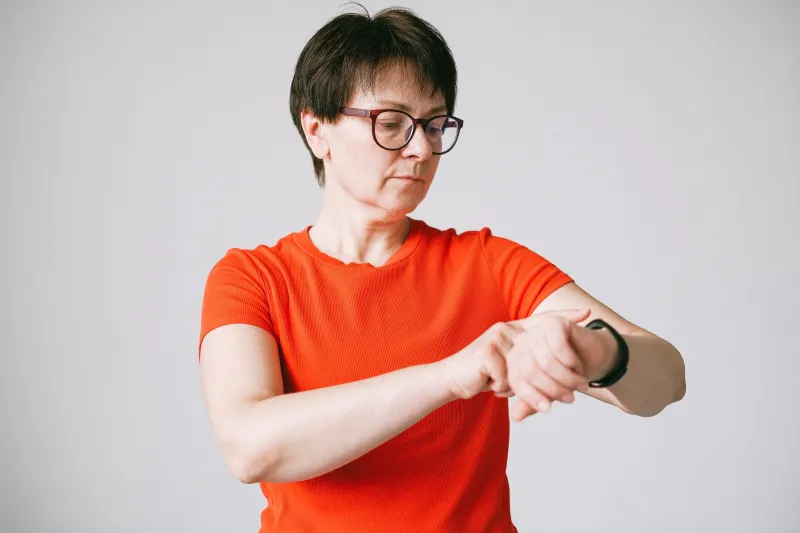
When Optimization Becomes the Problem
Let's paint a picture. You wake up and the first thing you do — before coffee, before sunlight, before a single conscious thought — is check your sleep score. It says 68. You feel fine, actually. Rested, even. But the number says otherwise, and suddenly your whole morning carries a low-grade dread you can't quite shake.
That feeling? That's not wellness. That's the wellness paradox in action.
Over the last decade, the quantified self movement has exploded. Wearables, apps, continuous glucose monitors, HRV trackers, calorie counters, VO2 max estimates — the average health-conscious American now has access to more biometric data than a clinical patient did twenty years ago. And the promise is seductive: if you can measure it, you can optimize it. If you can optimize it, you can be healthier, sharper, longer-lived, and more energized.
Except that's not quite how it's playing out.
The Cortisol Nobody's Tracking
Here's the physiological truth that the quantified self movement tends to skip over: anxiety is a biological event. When you feel stressed — even low-level, background stressed — your body releases cortisol. And chronically elevated cortisol does a number on your health. It disrupts sleep architecture, promotes fat storage around the midsection, suppresses immune function, and creates systemic inflammation.
So when you spend your day in a low hum of metric anxiety — obsessing over whether your steps are high enough, whether your heart rate variability is trending down, whether you hit your macros — you are generating a physiological stress response. A real one. One with measurable consequences.
The cruel irony is that the very pursuit of better health numbers can trigger the hormonal cascade that makes those numbers worse. Your sleep score tanks, so you stress about your sleep score, which elevates cortisol, which fragments your sleep, which tanks your sleep score further. Welcome to the loop.
Researchers have a name for the anxiety-inducing overconsumption of health information: cyberchondria. And while that term usually applies to doom-scrolling medical symptoms, the same psychological mechanism is at work when you're obsessively refreshing your fitness app. The more data you have, the more opportunities for alarm — and the human brain is wired to treat potential threats as actual threats.
The Measurement Trap Is Also a Joyless One
Beyond the cortisol problem, there's something less clinical but equally real: obsessive health tracking makes the experience of living in your body feel like a performance review.
Eating becomes arithmetic. Sleep becomes a graded test. A walk with a friend becomes a step-count opportunity. Exercise stops being something you do because it feels good and starts being something you do to hit a number. And when you miss the number — which you will, because you're human — there's shame attached to a meal, a rest day, a weekend.
This isn't a minor inconvenience. Research consistently shows that intrinsic motivation (doing something because it feels meaningful or enjoyable) produces far more sustainable behavior change than extrinsic motivation (doing something to hit a target). When your entire wellness practice is externally measured, you erode the intrinsic connection to your own body. You stop trusting how you feel and start trusting the algorithm instead.
That's a profound disconnection. And it's the opposite of what self-care is supposed to do.
Not All Metrics Are Created Equal
None of this means you should throw your fitness tracker in a drawer and never think about your health quantitatively again. Some metrics genuinely matter — the question is which ones, for whom, and with what level of emotional attachment.
Here's a useful framework:
Track metrics that inform action, not anxiety. Blood pressure, fasting glucose, and cholesterol are worth monitoring if you have risk factors — because they give you and your doctor actionable information. A sleep score that makes you feel bad about rest you actually needed? That's noise.
Give every metric a "so what" test. Before you track something, ask: if this number is off today, what will I actually do differently? If the honest answer is "spiral a little," that metric isn't serving your health. It's serving your anxiety.
Use trends, not daily data points. Your HRV fluctuates based on dozens of variables — stress, alcohol, illness, a hard workout, a weird dream. One low reading means almost nothing. A consistent downward trend over two weeks might mean something worth discussing with a provider. Check in weekly, not hourly.
Protect the subjective experience. How do you feel? How is your energy? How is your mood? These are legitimate health data points, and they're ones no wearable can fully capture. Build in regular, unscored check-ins with your actual, felt sense of wellbeing.
Choose one or two anchors, max. If you're going to track actively, pick the one or two metrics most relevant to your specific health goals and let the rest go. Running your first 5K? Track your running pace. Managing stress? HRV trends might be useful. Trying to lose weight? You probably don't also need to log your sleep cycles, your blood oxygen, and your daily step count simultaneously.
The Radical Act of Trusting Your Body
There's something almost countercultural about saying this in 2025, but: your body knows things your app doesn't.
Hunger is data. Fatigue is data. The feeling of genuine physical satisfaction after a meal, or the aliveness you feel after a run you actually enjoyed — those are data points too. They're just not monetizable ones, which is probably why the wellness industry doesn't spend much time amplifying them.
The quantified self movement, at its most aggressive, teaches you to distrust your own physical experience and defer to external measurement instead. That's not empowerment. That's outsourcing your relationship with your own body to a tech company's algorithm.
Real self-care — the kind that actually nourishes you — involves rebuilding that trust. It means practicing enough body awareness that you can feel the difference between tired-because-you-need-rest and tired-because-you're-avoiding-something. It means eating in a way that makes you feel good over hours and days, not just one that hits a macro split. It means sleeping until you feel rested and moving in ways that genuinely energize you.
None of that requires a subscription.
Finding Your Actual Baseline
If you've been deep in tracking culture for a while, stepping back can feel genuinely uncomfortable — almost like you're flying blind. That discomfort is worth sitting with, because it reveals something important: you've been using data as a substitute for self-knowledge, and self-knowledge takes a little longer to rebuild.
Start small. Take a one-week break from checking your wearable stats. Notice what you feel — in your body, not on your screen. Eat when you're hungry. Sleep when you're tired. Move when it sounds good. Then, at the end of the week, check in: how did you feel? What did you learn?
You might find that the absence of constant measurement feels like relief. Or you might find a couple of metrics you genuinely want to bring back, now with cleaner intentions.
Either way, you'll be making health decisions from a place of curiosity rather than anxiety. And that shift — that quiet, unsexy, untrackable shift — might be the most meaningful wellness upgrade you've made in years.