Your Nose Has a Direct Line to Your Brain — Here's How to Actually Use It
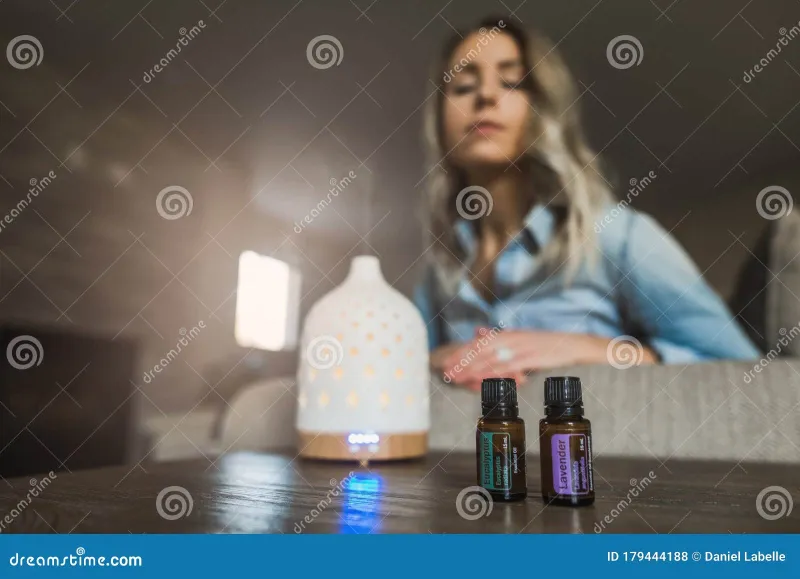
Photo: woman smelling essential oil diffuser calm relaxation wellness, via thumbs.dreamstime.com
You've probably seen the candles. The diffusers. The little roller bottles of lavender oil that claim to cure everything from anxiety to insomnia. And maybe you've rolled your eyes — rightfully so — because a lot of what gets marketed as "aromatherapy" is, let's be honest, just vibes with a price tag.
But here's the thing: underneath all that wellness-industrial-complex noise, there's genuinely fascinating neuroscience happening every time you take a breath. Your sense of smell isn't just a nice bonus sense. It's the only one with a direct, unfiltered connection to the limbic system — the part of your brain that processes emotion, memory, and stress response. Every other sense has to pass through a relay station first. Smell skips the line.
That matters more than most people realize.
Why Smell Is Different From Every Other Sense
When you see something stressful, hear something alarming, or feel physical pain, that sensory information travels through the thalamus — essentially your brain's traffic controller — before it reaches the regions that generate an emotional response. There's a built-in processing delay.
Smell doesn't work that way. Olfactory signals travel directly to the amygdala (your brain's threat-detection hub) and the hippocampus (memory central) without that pit stop. This is why a whiff of your grandmother's perfume can hit you with a wave of emotion before you've consciously registered what you're smelling. It's also why certain scents can shift your physiological state — heart rate, cortisol levels, muscle tension — faster than almost any other sensory input.
This isn't marketing copy. It's the actual anatomy of your nervous system.
What the Research Actually Backs (And What It Doesn't)
Let's get honest about the evidence landscape, because it's messier than your favorite wellness influencer suggests.
Lavender has the strongest clinical track record of any scent. Multiple randomized controlled trials — including studies published in journals like Phytomedicine and Frontiers in Behavioral Neuroscience — have found that lavender (specifically linalool, one of its primary compounds) demonstrably reduces anxiety markers, lowers cortisol, and can improve sleep onset. A standardized oral lavender preparation called Silexan is actually licensed in Europe as an anti-anxiety treatment. That's not nothing.
Peppermint shows consistent evidence for cognitive performance — alertness, reaction time, and working memory — making it genuinely useful for focus-oriented tasks rather than relaxation.
Bergamot has emerging evidence for mood elevation and anxiety reduction, with a few small studies showing measurable changes in heart rate variability after exposure.
Rosemary has been studied for memory and cognitive performance, particularly among older adults, with some promising results around 1,8-cineole, one of its active compounds.
What does not have meaningful clinical support? Most proprietary "stress relief" blends sold at mall kiosks, the vast majority of "sleep sprays," and pretty much anything that's trending on TikTok this week. Smelling nice and rewiring your nervous system are two very different things.
The Personalization Problem Nobody Talks About
Here's where it gets genuinely interesting — and where the wellness industry consistently drops the ball.
Scent response is profoundly individual. Your olfactory receptors, your scent memories, your personal associations — they all shape how a given smell lands in your nervous system. Lavender might signal calm for someone who grew up with it in their home. For someone else, it might be associated with a difficult memory, triggering the opposite response.
This means following a generic "best scents for anxiety" list is a flawed starting point. What works for your nervous system has to be built around your neurobiology and history, not a trending recommendation.
A more useful framework:
Start with your emotional memory. Think about scents that have historically made you feel safe, grounded, or at ease. These could be seasonal (pine, rain, sunscreen), food-based (cinnamon, vanilla, fresh bread), or floral. These are your personal nervous system anchors, and they're more powerful than any clinically studied compound applied without that personal resonance.
Layer in evidence-backed compounds intentionally. Once you know your baseline anchors, you can incorporate scents like lavender or bergamot strategically — for specific contexts like sleep prep or a pre-meeting stress reset — rather than just diffusing them into the air and hoping for the best.
Match scent to context, not mood. This is subtle but important. Using a specific scent consistently in a specific context (lavender only at bedtime, peppermint only during focused work) builds a conditioned association over time. Your brain starts to treat the scent as a cue, which amplifies its effect. Randomizing your scents across different situations undermines this.
Building a Scent Ritual That Actually Does Something
A ritual sounds fancy. It doesn't have to be. Here's a practical starting point:
Morning anchor: Choose one scent associated with alertness or clarity — peppermint, rosemary, citrus — and use it consistently as part of your morning routine. This could be a diffuser, a shower product, or simply keeping dried rosemary near your workspace. The consistency is the point.
Transition signal: If you work from home or have a hard time mentally clocking out, a specific scent used only during that transition can help your nervous system shift gears. Bergamot or a citrus-herb blend works well here.
Wind-down cue: Lavender, chamomile, or sandalwood used only in the 30-45 minutes before sleep. Keep it separate from your daytime scents so your brain doesn't get confused about what state it's supposed to enter.
One thing worth investing in: quality matters more than variety. A single high-quality essential oil or botanical product will do more for you than a drawer full of synthetic fragrance sprays. Look for products that list their actual botanical ingredients and avoid "fragrance" as a catch-all label, which often means synthetic compounds with no therapeutic relevance.
The Bigger Picture
We're living in a moment where stress is basically ambient — baked into how we work, consume information, and move through the world. The appeal of a quick sensory fix makes total sense. And scent, used thoughtfully, can genuinely be one of the more accessible tools in a self-care toolkit, precisely because it's fast-acting, low-cost, and doesn't require carving out an hour of your day.
But it works best when you treat it like what it actually is: a neurological input that you can use strategically, not a passive background element or a placebo dressed up in pretty packaging.
Your nose knows things your conscious mind is still catching up to. The question is whether you're giving it anything worth working with.