Are You Just Buying Expensive Urine? The Hard Truth About Your Supplement Stack
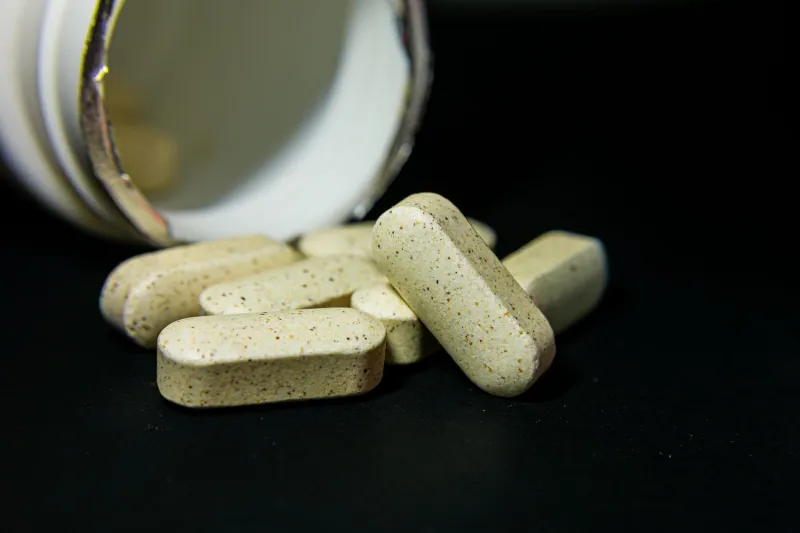
Let's be honest. If you've ever stood in the supplement aisle at Whole Foods or scrolled through a wellness influencer's Amazon storefront at midnight, you know the feeling. The logic seems airtight: more nutrients in, more health out. So you add magnesium for sleep, vitamin D for immunity, collagen for your skin, ashwagandha for stress, and a B-complex "just in case." Your cabinet starts looking like a small pharmacy, and you feel good about it.
Except — here's the uncomfortable part — you might not be absorbing most of what you're swallowing.
This isn't a fringe concern. It's a documented, well-researched reality that the supplement industry has very little financial incentive to talk about. And it's one of the biggest gaps between what wellness looks like and what it actually does for your body.
The 'More Is Better' Trap Is Real — And It Was Designed That Way
The US supplement market hit over $50 billion in 2023. That number doesn't grow by teaching people to take fewer pills. The cultural narrative around supplementation has quietly shifted from "fill a deficiency" to "optimize everything," and that shift has been enormously profitable for manufacturers and enormously wasteful for consumers.
When you're told that magnesium supports 300 enzymatic reactions, that zinc boosts immunity, and that omega-3s reduce inflammation — all true, by the way — the implied conclusion is that taking all of them aggressively will make you dramatically healthier. But that's not how human biology works. Your body isn't a passive container waiting to be filled. It's a dynamic, tightly regulated system that absorbs, converts, and excretes nutrients based on a complex set of factors that most supplement labels completely ignore.
Bioavailability: The Word the Supplement Industry Hopes You Never Google
Bioavailability refers to the proportion of a nutrient that your body actually absorbs and uses after ingestion. And the range across different supplement forms is genuinely staggering.
Take magnesium. Magnesium oxide — one of the cheapest and most commonly used forms — has a bioavailability of around 4%. Magnesium glycinate, on the other hand, absorbs significantly better and is gentler on the digestive system. Same mineral, radically different outcomes. Yet both bottles will say "Magnesium" on the front in the same font.
The same story plays out with iron (ferrous sulfate vs. iron bisglycinate), vitamin K2 (MK-4 vs. MK-7), and folate (folic acid vs. methylfolate — a distinction that genuinely matters for people with MTHFR gene variants, which affects roughly 40% of the US population). If you're not reading the fine print on the form of a nutrient, you're essentially guessing.
And then there's the fat-soluble vs. water-soluble divide. Vitamins A, D, E, and K require dietary fat to absorb properly. If you're taking your vitamin D capsule first thing in the morning on an empty stomach, you may be absorbing a fraction of what you paid for.
Nutrient Competition: When Your Supplements Are Fighting Each Other
Here's where things get genuinely counterintuitive. Some nutrients actively compete for the same absorption pathways, meaning that taking them together can actually reduce the effectiveness of both.
Calcium and magnesium are a classic example. They share transport channels in the gut, so a high-dose calcium supplement taken at the same time as magnesium can suppress magnesium absorption — which is particularly ironic given that most Americans are already deficient in magnesium. Similarly, high doses of zinc can deplete copper over time, and iron can interfere with zinc absorption when taken simultaneously.
On the flip side, some nutrients are synergistic in ways that matter enormously. Vitamin D3 works significantly better when paired with vitamin K2, because K2 helps direct calcium to bones rather than arteries. Vitamin C enhances non-heme iron absorption. Curcumin (the active compound in turmeric supplements) has very low bioavailability on its own but absorbs dramatically better when combined with piperine from black pepper.
The point isn't that supplementing is pointless. It's that how you take things, when you take them, and what you take them with matters enormously — and most people are just guessing.
How to Actually Audit Your Supplement Routine
Before you spend another dollar on a new bottle, do this first.
Start with bloodwork. This is non-negotiable. A basic panel that includes vitamin D, B12, iron/ferritin, magnesium (ideally RBC magnesium rather than serum), and a complete metabolic panel gives you actual data. Supplementing without knowing your baseline is like watering a plant without checking if the soil is dry. Your doctor can order this, or you can use a service like Everlywell or Function Health if your physician isn't forthcoming.
Inventory what you're actually taking. Write it all down — every pill, powder, and gummy. Then look up the form of each nutrient, not just the name. If your magnesium is magnesium oxide, your folate is folic acid, or your vitamin E is dl-alpha-tocopherol (the synthetic form), you may be paying for something your body can barely use.
Identify potential conflicts. A few worth knowing: don't take calcium and magnesium at the same time; separate iron from other minerals; take fat-soluble vitamins with a meal that contains fat; and if you're on any prescription medications, run your stack by a pharmacist — interactions between supplements and drugs are real and underreported.
Apply the "could food do this?" test. Supplements fill genuine gaps, but they're called supplements for a reason. If your diet is genuinely low in omega-3s, a quality fish oil makes sense. But if you're eating fatty fish twice a week and taking an omega-3 capsule because a podcast told you to, you may be getting negligible additional benefit.
The Supplements That Tend to Actually Earn Their Place
This isn't a blanket condemnation of the supplement industry. Some products, taken correctly, address real and widespread deficiencies.
Vitamin D3 (with K2) is legitimately worth considering for most Americans, particularly those in northern states or with limited sun exposure — studies consistently show that a significant portion of the US population is deficient. Magnesium glycinate or threonate is similarly well-supported, given how depleted modern soils are in magnesium and how many medications deplete it further. A high-quality omega-3 with a meaningful EPA/DHA dose has solid evidence behind it. Creatine monohydrate, for anyone doing strength training, is one of the most rigorously researched supplements in existence.
Beyond those? The evidence gets thinner fast, and the "optimization" supplements — the adaptogens, the nootropic blends, the beauty powders — often have more marketing budget than clinical validation.
Nourishing Smarter, Not Harder
The Self Care Emporium's whole ethos is about nourishing your body in ways that actually work — not just performing wellness for an audience of one in your bathroom mirror every morning. And that means being honest about the supplement spiral: the way we've been conditioned to equate spending with health, accumulation with optimization, and action with progress.
Real nourishment is more boring and more powerful than a 14-supplement morning stack. It's eating enough protein, getting sunlight when you can, sleeping like it's your job, and yes — taking the right supplements, in the right forms, at the right times, based on what your body actually needs.
The goal was never to have the most impressive pill organizer. It was to feel genuinely well. Those aren't the same thing, and the sooner we separate them, the healthier — and wealthier — we'll all be.